


Introduction
Eating healthy can feel overwhelming, but sometimes the simplest ideas are the most powerful. The Rice Diet Plan is a wonderful example. Created to help people with high blood pressure and kidney problems, this classic food plan has made a big comeback as an easy and effective path to better health and weight loss. In this article, we’ll break down the plan, explain how it works, and show you how to follow it today with no guesswork, no fancy foods, and no hype.
Let’s explore how adding more rice, fruits, and low-fat foods into your daily meals could be the reset your body needs in 2026. This article will explain how the 7-Day Rice Diet Plan works. It’s a wonderful way to reset your body, boost your energy, and start a healthy routine.
What Is the Rice Diet Plan?
The Rice Diet Plan is a unique food program focused on high-carb, low-fat, and low-sodium eating. Despite its name, it’s not just about eating rice all day. Instead, it uses rice as a base and adds in fruits, vegetables, and lean proteins to help the body reset and heal from the inside.
The plan is simple. It focuses on:
- Whole grains (mainly rice)
- Fresh fruits and vegetables
- Nonfat dairy (in moderation)
- No added salt or processed foods
People often follow it to lose weight, lower their blood pressure, and feel better overall.
The History Behind the Diet
The Rice Diet started in 1939 and was created by Dr. Walter Kempner at Duke University. It was used to help patients with severe kidney disease and high blood pressure when there were few treatment options.
By 1944, the plan gained national attention after many patients had major health improvements. By eating simple, low-sodium food like rice and fruits, patients showed weight loss and lower blood pressure even without medication.
Today, this low-calorie diet has come back as people look for natural ways to lose weight and improve their health without complicated meal planning.
Health Benefits of the Rice Diet
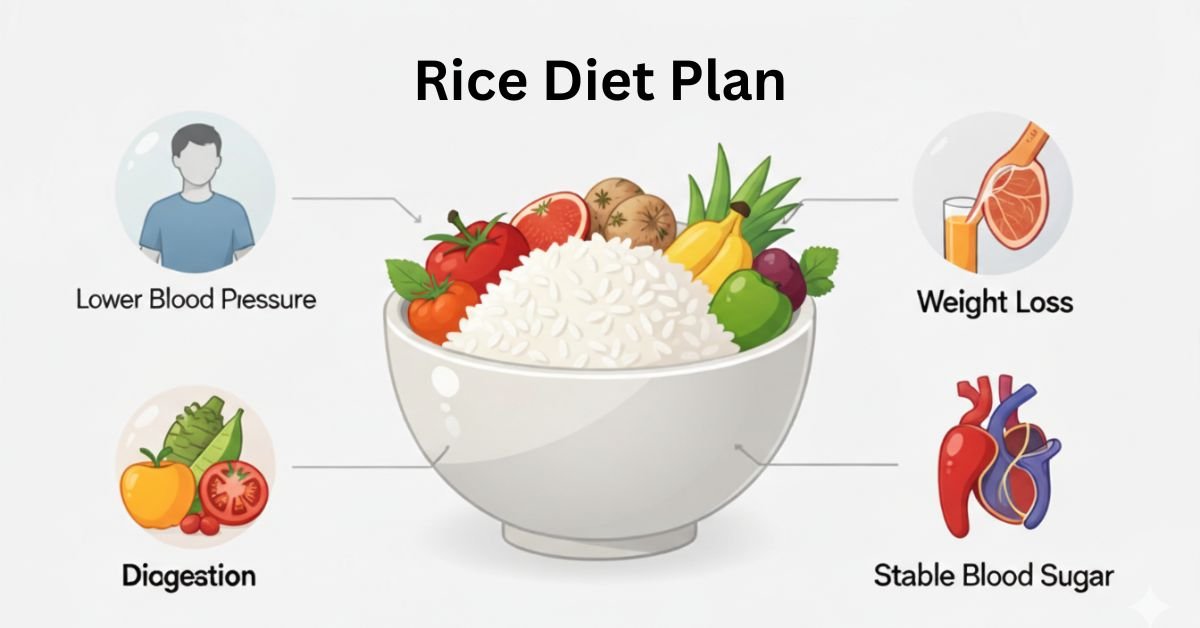
The Rice Diet isn’t just for weight loss; it may also help your overall well-being. Here are a few science-backed benefits:
- Lower Blood Pressure
Eating less sodium can reduce blood pressure. Since the Rice Diet is very low in salt, it’s great for heart health.
- Healthy Weight Loss
With fewer calories and more fiber, the plan helps people feel full while eating less overall.
- Better Digestion
The high-fiber base supports gut health, which can lead to improved energy, better sleep, and clearer skin.
- Blood Sugar Control
The low-fat, high-carb approach can also support blood sugar levels especially when using brown rice and fresh fruits in moderation.
How the Rice Diet Plan Works: Daily Breakdown
Let’s break down what a typical day looks like on the Rice Diet.
| Time | Meal | Example Foods |
| Morning | Breakfast | Cooked rice, ½ banana, nonfat Greek yogurt |
| Lunch | Midday meal | Brown rice, stir-fried veggies (no oil), melon |
| Dinner | Evening meal | White rice, steamed broccoli, baked apple |
| Snacks | Optional (light) | Unsweetened fruit, air-popped popcorn (no salt) |
Each day consists of about 800 to 1200 calories during the weight loss phase, with a slow increase depending on the progress and medical advice.
Note: Always consult a healthcare provider before going on any low-calorie diet.
Foods You Can Eat (and Avoid)
One of the best things about this diet is that it’s not about counting carbs, it’s about eating the right carbs in the right way.
Allowed Foods
- Long-grain white or brown rice
- Fruits (fresh, unsweetened)
- Vegetables (non-starchy)
- Nonfat dairy (plain yogurt, milk)
- Legumes (lentils, beans)
- Whole grains like oats or barley (in small amounts)
Foods to Avoid
- Processed meats
- Fried or fatty foods
- High-sodium snacks (chips, crackers)
- Sugar-sweetened drinks
- Salt and salty condiments (sauces, dressings)
Sample 7-Day Rice Diet Plan
Here’s an effortless example of what to eat during the 7-day rice diet plan. You don’t have to eat these exact meals, but the goal is to keep things simple and repeatable. You can also switch between white and brown rice for variety.
Sample Meal Plan
| Day | Breakfast | Lunch | Dinner |
| 1 | Rice + banana + plain yogurt | Brown rice + steamed greens | Wild rice + baked apple |
| 2 | Rice + blueberries | Rice + zucchini + bell pepper | Rice + grilled tofu |
| 3 | Rice pudding with almond milk | Rice + mixed salad (no dressing) | Brown rice + lentils |
| 4 | Rice + sliced peach | Rice wrap with spinach | White rice + steamed carrots |
| 5 | Oatmeal + banana | Rice bowl with beans | Rice + steamed cabbage |
| 6 | Rice + cinnamon apples | Rice + tomato + avocado | Rice + roasted squash |
| 7 | Rice + strawberries | Rice + sautéed mushrooms | Brown rice + grilled veggies |
Who Should Try the Rice Diet?
The Rice Diet is helpful for many people, but it’s not ideal for everyone. Here’s who might benefit most:
Great Fit For:
- Adults struggling with obesity
- People with high blood pressure
- Those wanting a heart-healthy food reset
- People comfortable with plant-based eating
Not Right For:
- Pregnant or breastfeeding women
- Kids or teens still growing
- Athletes needing higher protein
- People with certain chronic illnesses (e.g., Type 1 diabetes)
Always get medical advice before starting a diet.
Real Results and Success Stories
Many people report powerful results from following the Rice Diet. On average, dieters may lose 5–10 pounds in the first month, depending on activity levels and individual metabolism.
Case Example:
Name: Marissa K., 43, Florida
Result: Lost 22 pounds in 8 weeks
Comment: “It’s not about starving; it’s about resetting. I felt full, energized, and finally dropped stubborn weight.”
These findings are supported by research. Meal plans like the Rice Diet, which are heavy in plants and low in fat, helped people lose an average of 6% of their body weight over ten weeks, according to a 2026 Nutrition & Lifestyle assessment.
Risks and Considerations
While the Rice Diet is generally safe, it does come with some things to watch out for:
- Too low in protein if followed long-term
- Calorie intake may be too low for active individuals.
- There is a risk of vitamin B12 deficiency, so a supplement may be necessary if dietary intake is insufficient.
- Monotony: Some people get bored eating the same foods often.
It’s best used for short-term results or detox periods, not as a lifelong eating plan.
How to Get Started Rice Diet Plan (With Tips)
Starting the Rice Diet Plan doesn’t need to be hard. Here are some tips for getting rolling:
- Start Slowly: Try one rice-based meal per day for the first 3–4 days.
- Meal Prep Ahead: Cook a big pot of rice on Sundays to save time.
- Skip the Salt: Use herbs and lemon to flavor rice dishes.
- Mix in Variety: Try different fruits, grains, and nonfat yogurts.
- Track Progress: Use a journal or app to log meals and symptoms.
Pro Tip: Join an online community or download a rice diet tracker to stay on course.
FAQs
Is it possible to substitute brown rice for white rice?
Yes! Brown rice is actually better for fiber and blood sugar management.
Can you follow the rice diet as a vegetarian?
Absolutely. This plan is plant-based by default.
Is exercise required on this diet?
No, but walking or gentle exercise can improve results.
What if I get hungry between meals?
Choose fruits, veggie sticks, or a small plain yogurt as a snack.
Can I do this Rice Diet Plan for more than 7 days?
It’s safe for 2–4 weeks, but not long-term unless under medical guidance.
Conclusion
The Rice Diet Plan might sound old-fashioned, but in 2026, it’s proving that simple, plant-based eating still works. Whether you’re looking for a fresh start, a way to lower your blood pressure, or just want to kickstart clean eating, this low-fat, high-carb method can help you get there.
Stick to whole foods, keep it low-sodium, and stay consistent; your body will thank you.