

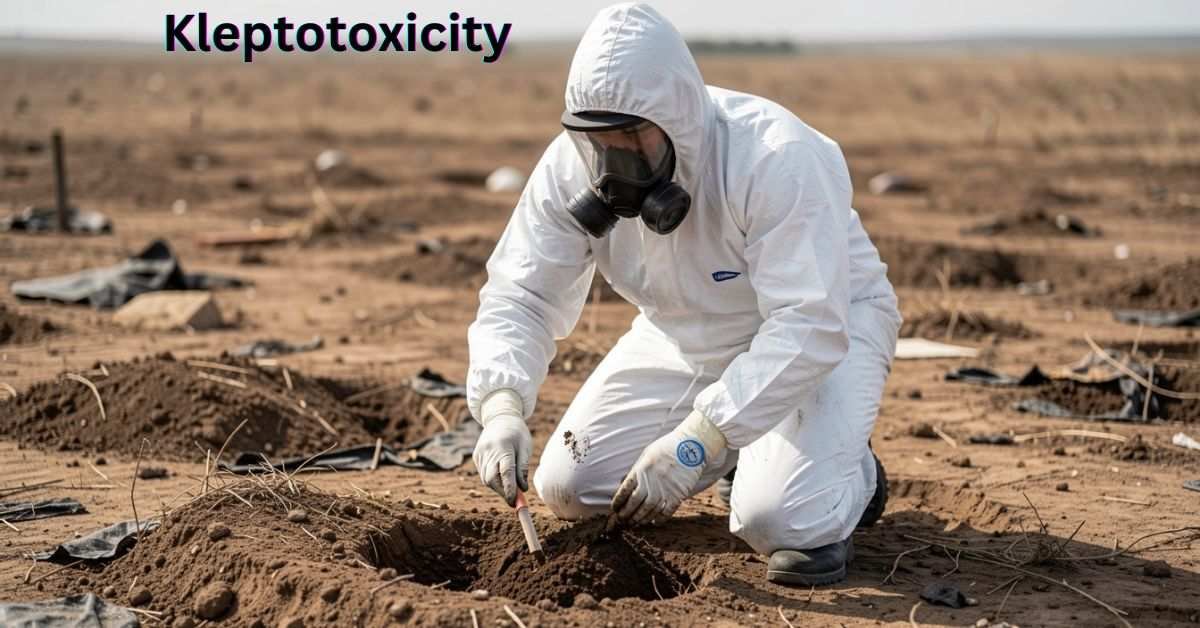
Introduction
In nature, some living things take other living things’ chemical protection. In tech, bad people take over digital tools. People use shared resources at work to get what they want. These sneaky types of “toxic stealing” do harm without being heard.
This trend is called “Kleptotoxicity,” a word used in science and technology to talk about the bad things that happen when you take harmful, protective, or important resources from another system.
In this in-depth guide, you’ll learn what this phenomenon means in biology, cybersecurity, and organizational behavior; why it is becoming more relevant in 2026; the risks it poses to ecosystems and digital infrastructure; and practical steps to detect and prevent it.
Whether you are a researcher, IT professional, or business leader, understanding this hidden threat can help you build more resilient systems.
What Is Kleptotoxicity?
At its core, Kleptotoxicity refers to a process where an entity steals toxic, defensive, or strategic resources from another system and uses them in ways that create imbalance or harm.
Simple Definition:
Kleptotoxicity is the harmful effect that occurs when an organism, individual, or system steals toxic or defensive resources from another and repurposes them, causing ecological, digital, or organizational disruption.
The word comes from:
- Klepto = to steal
- Toxicity = harmful effect
In biology, it describes animals that absorb and reuse toxins from prey.
In cybersecurity, it describes malicious code that hijacks protective tools.
It describes the destructive appropriation of resources or shared power in organizations.
Why Kleptotoxicity Matters in 2026
Modern systems are interconnected. When one part exploits another, the damage spreads faster than ever. According to the 2026 Global Systems Resilience Review (World Economic Forum), cross-system vulnerabilities have increased by 18% due to interdependence between ecological and digital infrastructures.
Understanding this concept helps us:
- Protect biodiversity
- Strengthen cybersecurity
- Improve ethical leadership
Origins in Ecology and Evolutionary Science
The earliest documented cases come from marine biology. Some sea slugs consume toxic algae and store the toxins in their tissues. This makes them poisonous to predators. Scientists call this “toxin sequestration.”
While such behavior can be adaptive, Kleptotoxicity may also disrupt ecological balance if:
- The predator population declines
- Toxin accumulation spreads through food webs.
- Biodiversity becomes unstable
Biological Mechanism
- Organism consumes toxic prey
- Toxin resists digestion
- Specialized cells store the chemical
- Toxin becomes a defensive weapon
This strategy has evolved independently in insects, amphibians, and marine invertebrates.
2026 Research Update
A 2026 study from the University of California Marine Sciences Department found that climate-driven shifts in algae populations are increasing toxin transfer rates in certain reef ecosystems.
This suggests ecological imbalance may accelerate toxin-stealing behaviors.
Case Studies from Marine and Terrestrial Ecosystems
Let’s examine real examples.
Ecological Examples of Toxin Sequestration (2026 Data)
| Organism | Source of Toxin | Purpose | Ecological Risk |
| Sea slugs | Toxic algae | Predator defense | Food web imbalance |
| Poison dart frogs | Toxic ants | Skin defense | Predator population shifts |
| Monarch butterflies | Milkweed | Chemical defense | Bird toxicity transfer |
Source: National Oceanic and Atmospheric Administration, 2026; NOAA.gov
Ecological Risks
- Bioaccumulation through trophic levels
- Reduced predator biodiversity
- Increased ecosystem fragility
In some reef systems studied in 2026, toxin transfer altered predator behavior patterns by up to 12%. This demonstrates that while individual organisms benefit, the broader system may suffer.
How the Concept Applies to Digital Networks
In cybersecurity, the same pattern appears. Instead of stealing chemicals, attackers steal defensive tools, credentials, or encryption methods.
Examples include:
- Malware hijacking security certificates
- Hackers reusing stolen API tokens
- Botnets using legitimate cloud resources
According to the 2026 Cybersecurity Infrastructure Report (CISA.gov), 31% of enterprise breaches involved attackers leveraging existing internal tools rather than deploying external malware.
This is digital resource hijacking.
Ecological vs Digital Comparison
| Aspect | Ecological System | Digital System |
| Resource stolen | Toxins | Credentials, encryption keys |
| Purpose | Defense | Evasion, persistence |
| Risk | Food web imbalance | Network compromise |
| Detection method | Chemical analysis | Behavioral monitoring |
The pattern is similar:
- Steal defensive material
- Repurpose it
- Disrupt balance
This cross-domain similarity is why scientists and cybersecurity experts increasingly use shared terminology.
Organizational Culture and Resource Exploitation
The same concept applies inside companies.
In 2026, organizational psychologists describe toxic resource appropriation as
- Leaders hoarding institutional knowledge
- Teams misusing shared budgets
- Employees exploiting internal systems
According to a 2026 Deloitte Human Capital Trends report, 22% of employees reported resource misuse in hybrid workplaces.
Effects include:
- Trust erosion
- Reduced innovation
- Increased burnout
This form of internal exploitation is harder to detect because it often hides behind authority structures. Unlike ecological systems, human systems require governance to maintain fairness.
Why It’s Increasing in 2026
Several global shifts amplify this pattern:
- Hyper-Connectivity
Systems are more interconnected than ever.
- Climate Stress
Environmental changes shift toxin dynamics.
- AI & Automation
Advanced tools can be hijacked quickly.
- Hybrid Work Models
Reduced oversight increases misuse opportunities.
The 2026 World Systems Interdependence Index shows a 15% increase in cross-sector vulnerability exposure compared to previous years. This means exploitation in one area can ripple out to others.
Early Warning Signs and Detection Methods
Detecting hidden exploitation early is critical.
Ecological Indicators
- Sudden predator decline
- Unusual toxin concentration
- Altered feeding patterns
Cyber Indicators
- Unusual internal privilege escalation
- Legitimate tool misuse
- Irregular access logs
Organizational Indicators
- Knowledge silos
- Resource bottlenecks
- Disproportionate influence concentration
Modern AI-based monitoring systems can detect abnormal patterns across digital environments, according to a 2026 MIT Technology Review analysis. Early detection prevents systemic collapse.
Ecological and Cyber Mitigation Strategies
Mitigation depends on system type.
In Ecosystems
- Biodiversity restoration
- Controlled toxin monitoring
- Habitat protection
NOAA’s 2026 reef restoration program reduced toxin concentration variability by 9% in pilot regions.
In Digital Systems
- Zero-trust architecture
- Behavioral analytics
- Role-based access control
Organizations adopting zero-trust frameworks saw a 27% reduction in internal credential misuse (CISA 2026).
In Organizations
- Transparent governance
- Knowledge-sharing systems
- Ethics training
Resilience requires layered defense.
Policy, Ethics, and Governance Implications
Regulators are paying attention.
In 2026:
- The U.S. National Cyber Strategy emphasizes internal misuse monitoring.
- Environmental agencies increased toxin surveillance budgets.
- Corporate governance standards require digital transparency
Ethical considerations include:
- Balancing monitoring with privacy
- Protecting whistleblowers
- Ensuring equitable access to shared resources
For deeper reading, see:
- CISA.gov (Cybersecurity guidance)
- NOAA.gov (Marine ecosystem reports)
- WorldEconomicForum.org (Systems resilience research)
The Future of System Resilience
The next frontier is predictive modeling.
Researchers are using:
- AI ecosystem simulations
- Digital twin infrastructure
- Organizational behavior analytics
The goal is not only detection but also prevention.
Future systems will likely integrate:
- Real-time toxin monitoring
- Autonomous threat containment
- Transparent governance dashboards
Resilience will depend on cooperation between ecologists, technologists, and policy experts.
FAQs
What does kleptotoxicity mean?
It refers to the harmful effects of stealing and reusing toxic or defensive resources from another system.
Where is this phenomenon observed?
It appears in ecosystems, cybersecurity environments, and organizational structures.
Is Kleptotoxicity always intentional?
No, in nature it can be evolutionary, while in digital and organizational settings it may be deliberate or accidental.
Why is Kleptotoxicity important in 2026?
Greater system interconnectivity makes hidden exploitation faster and more damaging.
How can it be prevented?
We can prevent it through monitoring, transparent governance, biodiversity protection, and rigorous digital access controls.
Conclusion
In a world where everything is linked, sneaky ways of taking advantage of people can slowly weaken even the best systems. The basic pattern is the same whether it’s sea organisms that use toxins for something else, cyberattackers who take over trusted tools, or workplace dynamics where shared resources are abused: when important or protective assets are taken without balance, instability happens.
Scientists, technologists, and leaders can spot these risks earlier and take better steps to protect people when they understand kleptotoxicity. We can make ecosystems, digital infrastructure, and organizations more resilient in 2026 by putting money into monitoring, open government, protecting biodiversity, and zero-trust security models. This will help us catch small problems early and fix them before they become widespread failures.