

Introduction
In the fast-moving world of technology, strange codes and unusual digital terms often appear without warning. Some go away fast, while others get people talking and thinking. One such term that has gained attention across tech blogs, forums, and analytics reports is 257hmcy. At first glance, it may look like a random string of letters and numbers. But many experts believe it represents something deeper about how the modern web works.
As online systems grow more complex in 2026, hidden identifiers, tracking patterns, algorithm markers, and coded references are more common than ever. People want to know: Is 257hmcy a software tag? A tracking signal? A hidden SEO marker? Is it more than just a digital experiment?
This guide explains everything in clear and simple language. We’ll explore what it might mean, how it connects to web technology, why it is being discussed, and what businesses, developers, and everyday users should know. The goal is not speculation but understanding how modern digital systems operate and why unusual identifiers like 257hmcy sometimes appear in today’s tech landscape.
Why Random Codes Matter in Modern Technology
To understand 257hmcy, we first need to understand why random-looking codes exist online. The internet runs on identifiers. Every website, device, user session, and database entry has some form of coded label. Systems benefit from these codes:
- Track sessions
- Store data securely
- Connect APIs
- Monitor performance
- Organize analytics
For example:
- Google Analytics assigns tracking IDs.
- Websites generate session tokens.
- Servers create unique request IDs.
- Content management systems tag database records.
These identifiers may look random, but they serve specific technical purposes. In 2026, digital systems rely even more on automation and AI-driven analytics. Machine learning models often generate string-based markers to label patterns or experiments. These strings sometimes surface publicly in URLs, logs, or metadata.
Such behavior is one reason why terms like 257hmcy attract attention. When people see an unfamiliar code appearing repeatedly, they assume it must represent something meaningful. In most cases, such strings are part of structured digital systems rather than secret messages. But understanding how identifiers work helps us see the bigger picture.
The Growing Role of Web Identifiers in 2026
Web identifiers have become more advanced over the past few years. According to the National Institute of Standards and Technology (NIST.gov), secure digital identification is critical for protecting user data and maintaining trust online. Modern identifiers now support:
- Security systems with zero trust
- AI-driven traffic screening
- Bot detection
- Customized distribution of information
- Communication that is encrypted
Strings similar to 257hmcy could represent:
- Testing flags
- Beta feature markers
- Content indexing signals
- API call references
- Encrypted hash fragments
As artificial intelligence continues to automate backend processes, many of these identifiers are created without human naming logic. That is why they often look random. Understanding this context helps reduce confusion. What seems mysterious may simply be part of automated web infrastructure.
How Search Engines Handle Hidden Codes
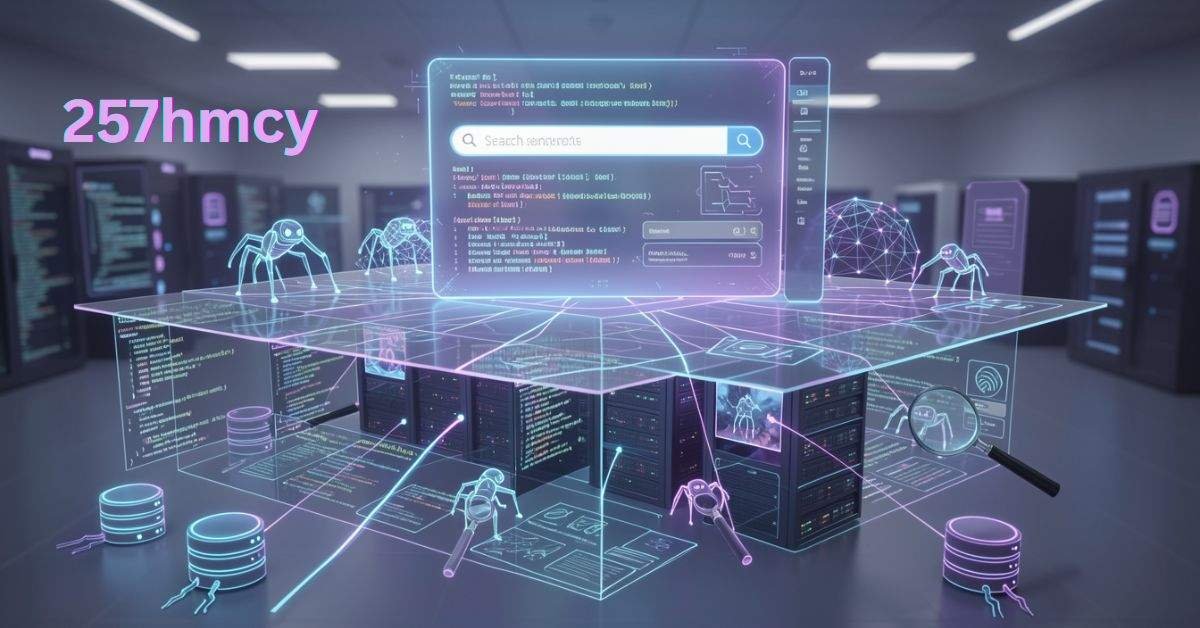
Search engines like Google and Bing process billions of identifiers daily. They scan:
- Page IDs
- Metadata strings
- Structured data
- Tracking parameters
- Embedded scripts
Google’s official documentation (developers.google.com) explains how structured data helps search engines understand page content. Search systems do not rank random strings by themselves. Instead, they evaluate:
- Content quality
- User experience
- Authority signals
- Trustworthiness
- Technical performance
If a string like 257hmcy appears in URLs or metadata repeatedly, search engines treat it as a data element unless it gains widespread context or search demand. This means visibility is not about the code itself. It is about the content and user engagement surrounding it.
For website owners, this highlights an important lesson: focus on value, clarity, and strong SEO fundamentals, not random identifiers.
Possible Technical Explanations Behind 257hmcy
Let’s explore practical technical possibilities. In real-world systems, a string like 257hmcy could be:
- A reference key for a database
- A temporary session ID
- A software build identifier
- A tracking experiment label
- An AI-generated content marker
Here is a simple comparison table
| Identifier Type | Purpose | Visible to Users? | Example Use Case |
| Session Token | Tracks user visit | No | Login sessions |
| API Request ID | Tracks system communication | Rarely | Payment systems |
| Experiment Flag | A/B testing marker | Sometimes | UI testing |
| Database Key | Organizes records | No | User accounts |
| Content Index Label | Search organization | Sometimes | AI sorting |
Most random strings fall into these categories. Without official confirmation, it’s safest to assume such identifiers are technical rather than symbolic.
Hidden Trends Shaping the Modern Web
The digital world in 2026 is heavily shaped by three major forces:
- Artificial Intelligence
- Automation
- Data-driven personalization
According to MIT Technology Review (technologyreview.com), AI-generated systems now control much of online content tagging and pattern recognition.
This creates environments where:
- Algorithms label data automatically.
- Systems generate random markers.
- Testing experiments run continuously
- Hidden tags influence layout and ranking
Some analysts suggest that 257hmcy may represent one of these automated processes surfacing publicly. Whether or not that is true, the broader lesson remains important: the web is increasingly machine-managed. Understanding this helps businesses stay prepared.
Security and Privacy Considerations
Whenever a mysterious digital string gains attention, security questions follow. The Cybersecurity and Infrastructure Security Agency (CISA.gov) explains that secure systems rely on unique identifiers to prevent fraud and cyberattacks:
Identifiers help:
- Prevent account hijacking
- Detect bots
- Track suspicious traffic
- Protect encrypted data
However, legitimate identifiers should never expose private information. If users encounter repeated strings like 257hmcy, they should:
- Avoid clicking unknown links.
- Check website security certificates
- Ensure HTTPS encryption
- Use trusted antivirus tools.
There is no verified evidence linking this specific string to malware or threats. But good cybersecurity habits are always important.
What Businesses and Marketers Should Learn
For business owners, the lesson is not about chasing mysterious codes. Instead, focus on:
- Strong content
- Clear user experience
- Technical SEO
- Secure hosting
- Transparent data policies
Here’s a simplified priority chart
| Business Focus Area | Importance in 2026 | Why It Matters |
| Content Quality | Very High | Drives rankings |
| Site Speed | Very High | Impacts UX |
| Mobile Optimization | Essential | Most users mobile |
| Secure Infrastructure | Critical | Builds trust |
| Random Identifiers | Low | Mostly backend |
While discussions about 257hmcy may generate curiosity, sustainable digital growth comes from fundamentals. Chasing trends without understanding them can waste time and resources.
The Psychology of Digital Curiosity
Why do people become so curious about codes?
People are drawn to mysteries by nature. When we see a pattern that repeats, our brain wants meaning. Online communities often:
- Analyze hidden strings
- Build theories
- Search for deeper messages
- Connect unrelated clues
In reality, many digital identifiers are simply automated outputs. The attention around 257hmcy shows how quickly curiosity spreads in the age of social media and forums. This reminds us that digital literacy is important. Not every unusual pattern signals a hidden agenda.
How Developers Create and Use System Codes
Developers rarely create random strings by hand anymore. Most systems use:
- Hashing algorithms
- Random string generators
- Encrypted identifiers
- Machine learning tags
For example:
- SHA-based hashes create long encoded values.
- AI classifiers generate internal labels.
- Cloud systems auto-assign request IDs.
If 257hmcy was generated by a system, it likely followed automated rules rather than human intention.
Developers prioritize:
- Scalability
- Security
- Performance
- Data integrity
Identifiers are simply tools that support these goals.
What the Future Holds for Digital Identifiers
By 2026 and beyond, digital systems will rely even more on:
- Decentralized identity models
- Blockchain-based authentication
- AI-managed indexing
- Automated content tagging
As systems evolve, new codes and markers will continue to appear. The lesson from observing 257hmcy is simple: understand technology before assuming meaning. Future-ready organizations will focus on:
- Transparency
- Ethical AI
- Strong cybersecurity
- User-centered design
Identifiers will remain behind-the-scenes tools, not headline features.
FAQs
Is 257hmcy a virus or malware?
There is no proof that it is connected to malware.
Why do random codes appear on websites?
They are often session IDs, tracking markers, or database references.
Can such identifiers affect SEO?
Not directly, SEO depends on content quality and technical health.
Should businesses worry about strange digital strings?
Only if they impact performance or security.
Will similar codes continue appearing online?
Yes, as automation and AI systems expand.
Conclusion
The digital world is full of hidden systems working quietly behind the scenes. Strings like 257hmcy may look mysterious, but in most cases, they are part of automated web infrastructure. As technology grows more advanced, these identifiers will become even more common.
Instead of focusing on speculation, it’s smarter to build strong digital foundations, secure systems, helpful content, fast performance, and ethical data practices. That is what truly drives success online in 2026. If you’re a developer, marketer, or business owner, stay informed, follow trusted cybersecurity guidance, and prioritize user trust. Instead than confusing people, technology should empower them.