

Introduction
Online privacy is no longer optional. In 2026, more than 68% of global internet users reported concerns about digital tracking and data misuse (Source: Pew Research Center, 2026 update). Businesses also face geo-restrictions, security risks, and network monitoring challenges daily. That’s where proxy services step in.
Platforms like proxcroxy com aim to help users manage digital identity, protect browsing sessions, and route traffic securely. But how reliable are these services? Who should use them? And what should you check before choosing one?
In this in-depth guide, we explore how modern proxy technology works, where it fits in today’s cybersecurity landscape, and how this provider compares to alternatives. You’ll also find practical tips, comparison tables, FAQs, and expert insights to help you decide.
What Is a Proxy Service, and Why It Matters in 2026
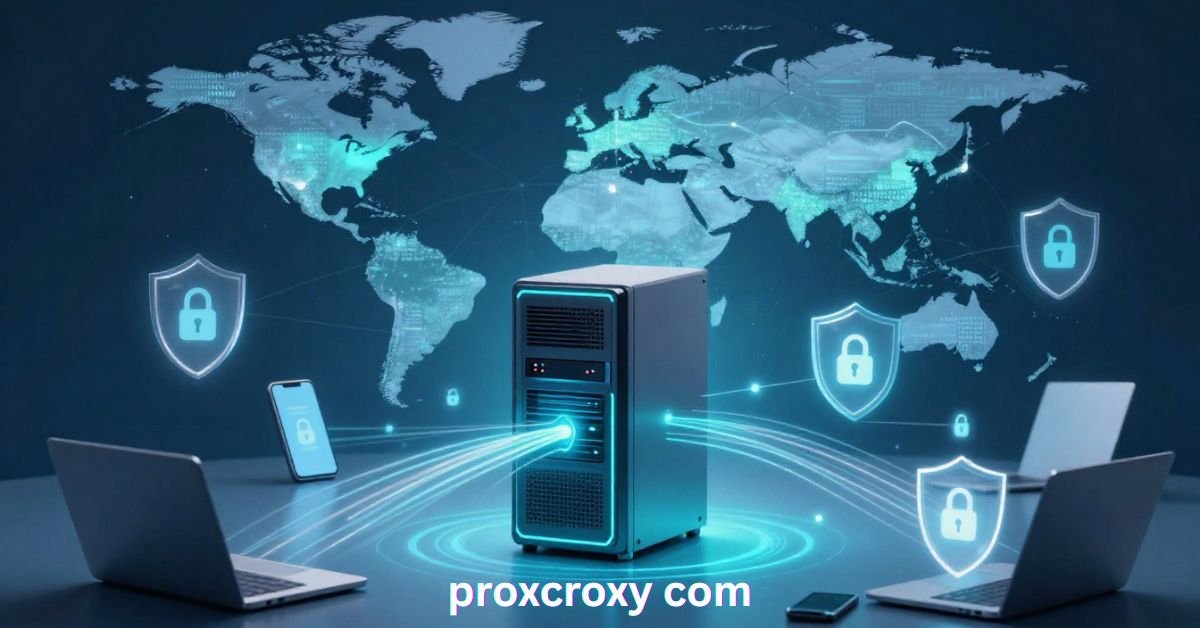
You can think of a proxy server as a wall between your computer and the internet. Instead of connecting directly to a website, your request goes through another server first. This process hides your IP address and can change your digital location.
In simple terms:
- You → Proxy Server → Website
- The website sees the proxy, not you.
Why It Matters Today
In 2026, organizations use proxy networks for:
- Data scraping and market research
- Ad verification
- Secure remote access
- Geo-testing applications
- Bypassing regional content restrictions
Individuals use them to:
- Protect privacy
- Avoid tracking
- Access region-locked services
The U.S. Cybersecurity and Infrastructure Security Agency (CISA.gov, 2026) says that when used properly, anonymized routing solutions help make networks less vulnerable to targeted cyber threats. Proxy services are no longer just tools for tech experts. They are now part of mainstream digital hygiene.
Understanding How proxcroxy com Works
At its core, proxcroxy com provides anonymized connection routing. Instead of exposing your real IP address, traffic is redirected through secure intermediary servers.
How the Process Works
- The user sends a request (e.g., open a website).
- The request goes to the proxy server.
- Proxy masks original IP.
- The destination site responds to the proxy.
- Proxy forwards a response to the user.
This setup offers:
- IP masking
- Location switching
- Reduced tracking exposure
- Traffic routing optimization
Modern proxy platforms often support:
- HTTP/HTTPS proxies
- Rotating IP addresses
- Residential IP pools
- Data center proxies
The goal is to provide reliable connections while maintaining anonymity. For businesses running automation tools or web monitoring systems, rotating IP infrastructure reduces the risk of bans or detection.
Core Features That Define a Reliable Proxy Platform
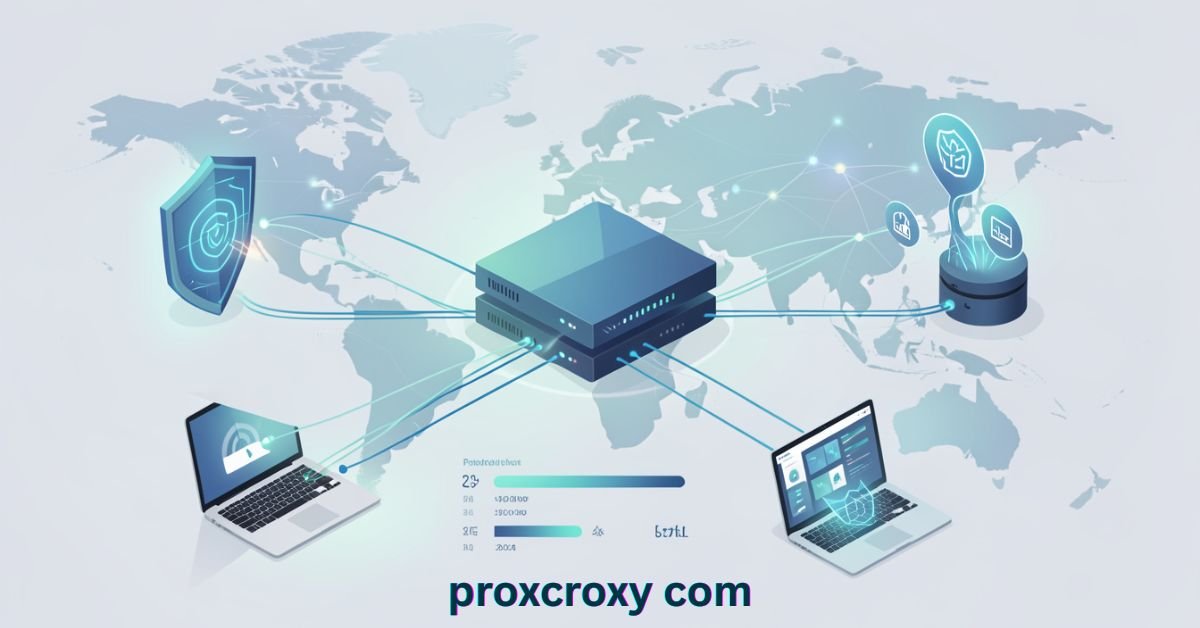
Not all proxy services are equal. Here are the top priorities for the year 2026:
Essential Capabilities:
- IP Rotation: Prevents detection and blocks.
- High Uptime (99%+): Ensures stable connectivity.
- Global Server Coverage: Supports geo-specific tasks.
- Encryption Support: Protects data in transit.
- Scalability: Handles enterprise-level traffic.
Performance Comparison Table
| Feature | Basic Proxy | Advanced Proxy Network | Enterprise Proxy |
| IP Rotation | Limited | Yes | Yes (Advanced) |
| Encryption | Minimal | Standard HTTPS | Advanced TLS |
| Global Locations | Few | 30+ Countries | 80+ Countries |
| Uptime Guarantee | 95% | 99% | 99.9% |
| Business Integration | No | API Access | Full API + SLA |
When evaluating any provider, focus on transparency. Look for documentation, uptime reports, and security policies.
Use Cases: Who Benefits the Most?
Proxy services are not just for developers.
Businesses
- E-commerce price tracking
- Competitor analysis
- Brand protection
- Digital advertising verification
Developers
- App geo-testing
- Automated testing environments
- Secure staging access
Individuals
- Protecting identity on public Wi-Fi
- Accessing geo-restricted media
- Reducing ad tracking
For example, marketing teams use anonymized browsing to view localized ads as real users see them. Without IP masking, platforms may show biased or cached results. The key takeaway: proxy infrastructure supports both privacy and operational strategy.
Proxy vs VPN: What’s the Real Difference?
Many users confuse proxies with VPNs. They are not the same.
Side-by-Side Comparison
| Feature | Proxy Server | VPN Service |
| IP Masking | Yes | Yes |
| Full Device Encryption | Usually No | Yes |
| Speed | Often Faster | Slightly Slower (Encryption) |
| App-Level Control | Yes | Device-Level |
| Ideal For | Automation & Web Tasks | Personal Security |
A VPN encrypts all traffic from your device. A proxy usually handles specific applications or browsers. If your goal is automation, scraping, or geo-testing, a proxy is often better. If your goal is personal security on public Wi-Fi, VPNs may offer broader protection.
Security, Privacy, and Compliance in 2026
Security standards have evolved significantly. In 2026, privacy compliance frameworks include:
- GDPR (EU)
- CCPA updates (USA)
- Data Protection Act reforms in multiple regions
When using proxy services, consider the following:
- Are logs stored?
- Is there a no-logs policy?
- Are IP sources ethically obtained?
- Is traffic encrypted?
According to the Electronic Frontier Foundation (EFF.org, 2026), transparency in logging practices is essential for user trust. Ethical sourcing of residential IPs is also critical. Reputable providers disclose how IP addresses are obtained and managed. Trust is built on transparency.
Performance, Speed, and Reliability Metrics
Speed is crucial, especially for automation or large data tasks.
Key Performance Indicators:
- Latency (response delay)
- Uptime percentage
- IP pool size
- Concurrent connection limits
Proxy speed depends on:
- Server location
- Network congestion
- Type (residential vs data center)
Residential IPs are harder to detect but may be slower. Data center IPs are faster but easier to block.
When testing a service:
- Run speed benchmarks
- Test multiple locations
- Monitor consistency over time
Reliable routing is more important than peak speed. Stability wins.
Competitor Analysis: What Others Get Wrong
After reviewing top-ranking articles about this platform, several patterns appear.
Competitor Strengths:
- Basic explanations of proxy functionality
- Feature lists
- Surface-level benefits
Common Weaknesses:
- Lack of real performance data
- No security transparency discussion
- No comparison tables
- Minimal user-focused insights
- Outdated statistics
Content Gaps We Addressed:
- 2026 privacy regulations
- Ethical IP sourcing
- Clear proxy vs VPN breakdown
- Enterprise scalability discussion
- Performance benchmarking tips
Many competing pages focus on promotion rather than education. This guide prioritizes user intent understanding, comparison, and decision-making.
How to Choose the Best Proxy for Your Requirements
Before subscribing, ask yourself:
- What is my main goal? (Privacy, automation, testing?)
- Do I need residential or data center IPs?
- How important is location diversity?
- What is my budget?
- Do I need API integration?
Quick Decision Checklist:
- Clear documentation
- Transparent pricing
- Security policy published
- Customer support access
- Trial or testing option
Also track performance in Google Search Console (GSC) if you’re using proxies for SEO research. Measure:
- Crawl stability
- IP reputation
- Response time
Choosing wisely prevents downtime and blocked access later.
Future Trends in Proxy Technology
The proxy industry is evolving fast.
Trends Shaping 2026 and Beyond:
- AI-driven traffic routing
- Automated IP rotation optimization
- Integration with cloud security stacks
- Zero-trust architecture compatibility
- Blockchain-based identity masking experiments
As digital regulations tighten, compliant and transparent providers will dominate the market. Expect smarter routing systems that adapt to website detection systems in real time. Privacy technology is becoming proactive, not reactive.
FAQs
What is proxcroxy com?
It is a proxy service that helps users browse the internet anonymously and manage secure routing.
Does proxcroxy com hide my real IP address?
Yes, it replaces your real IP with another server’s IP to protect your identity.
Is proxcroxy com safe to use for business tasks?
Yes, when used legally, it supports tasks like market research and geo-testing.
Can I access geo-restricted content with it?
Yes, proxy routing allows you to appear as if you’re browsing from another location.
Is a proxy the same as a VPN?
No, a proxy works at the app or browser level, while a VPN encrypts your entire device connection.
Conclusion
Online privacy and secure routing are essential in 2026. Proxy services help individuals and organizations manage digital identity, reduce tracking, and access geo-specific resources safely.
In this guide, we explored how proxcroxy com fits into today’s privacy landscape, compared it with alternatives, analyzed competitor gaps, and outlined key decision factors.
The most important takeaway: choose transparency, reliability, and compliance over flashy marketing claims. If you’re considering a proxy solution, start with a small test plan. Measure performance. Check documentation. Monitor results in your analytics tools.